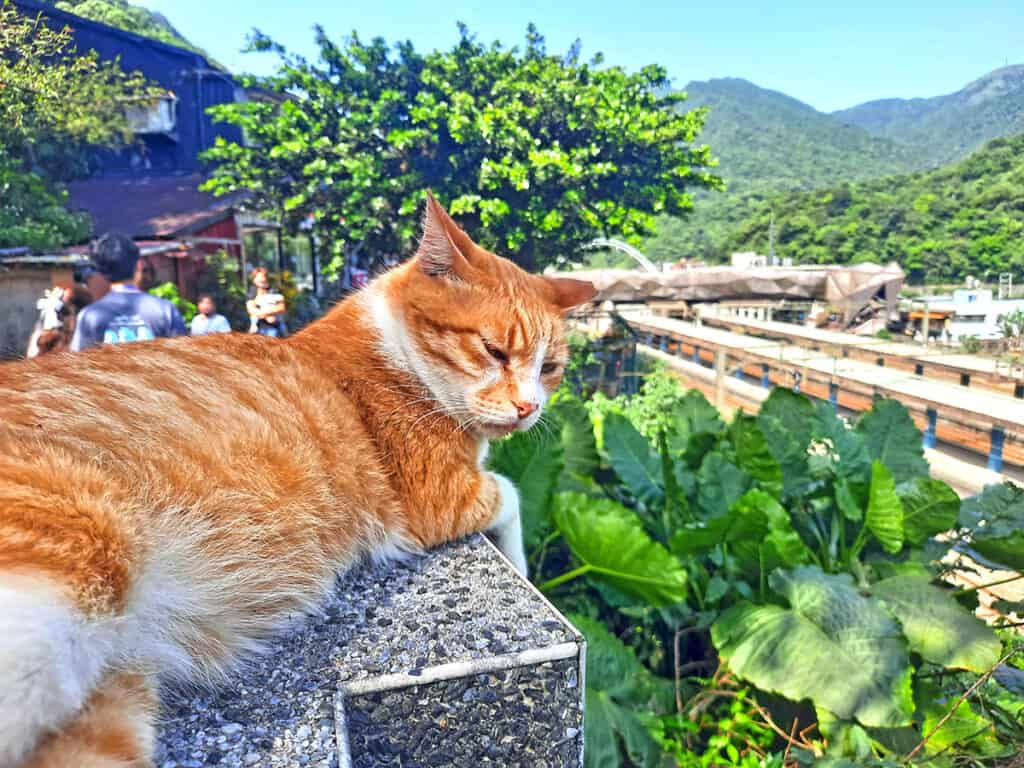
A cat snoozing on the backdrop of the village’s oddly-shaped train station
photography by: Omri Westmark

As more and more rural communities succumb to the mass migration of young people to big cities and simply cease to exist, few stand out for reinventing themselves. One such community is a Taiwanese village, 35 kilometers east of downtown Taipei. Formerly a mining town with thousands of residents, Houtong has evolved in recent years into a cat-thronged hamlet, where people are outnumbered by their whiskered friends.

By: Omri Westmark
Date: 14:29 05.01.24
Last Update: 17:55 05.01.25
Well ensconced in the forested outskirts of Taipei, Houtong was founded during the Japanese colonial rule as a mining town. In its heyday, over 200,000 tons of coal were annually processed at the local plant, more than at any other place in Taiwan at that time. The rich deposits of coal prompted a mass influx of newcomers, so much so that at one point, the village’s population stood at more than 6,000 inhabitants.
Over the decades, however, the local coal industry gradually declined until it could no longer sustain itself. The mine was finally shut down during the 1990s, while the nearby washery and warehouse were left to rot. In the years that followed, the once-thriving town was on the precipice of becoming a ghost village. In fact, due to large waves of emigration, the number of villagers shrank to a measly one hundred.
Nevertheless, when everything seemed completely hopeless, a deus ex machina appeared out of nowhere. In 2009, Houtong-born Peggy Chien posted copious photographs of the village’s feline dwellers all over the internet, portraying the place as a cat paradise. This online revelation was soon followed by a nationwide pilgrimage of cat enthusiasts and volunteers, all of whom bolstered the transformation of Houtong from an empty townlet to a cat-themed Disneyland.
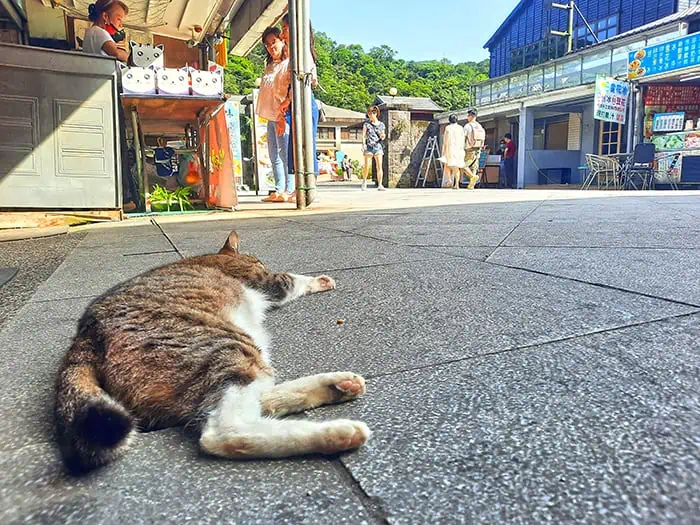
As of today, more than 200 mousers call this hamlet home, patrolling the streets, stairways, and lawns. The furry critters come in all colors and personalities, from a timid ginger male to a slothful, friendly calico, for whom a fondle is just purr-fect. To cater to the growing number of day-trippers, the village now revolves almost entirely around its cattish charm, with feline-inspired cafés, eateries, souvenir shops, and most bizarrely, architecture too.
Houtong Cat Village is easily accessible by a frequent train service from Taipei. The trip from Taipei Main Station takes roughly an hour and costs 50 TWD for a one-way ticket.
photography by: Omri Westmark
From the moment visitors set foot in Houtong, they will immediately be greeted with a symphony of meows. Even without tabbies in plain sight, almost anything around is somehow related to our four-legged protagonists, with dozens of feline-themed sculptures and murals peppered throughout the streets.
As most tourists come here by train, the first thing to awe at will probably be the cat bridge that spans over the rail tracks, which cut the village in half. Constructed in 2013 after the old overpass was demolished, the whimsically designed bridge features a spiky roof, reminiscent of cat ears. Crossed by pedestrians and felines alike, the bridge is dotted with multiple feeding stations, each of which is decorated with a cartoonish cutout (or cat-out).
While in Tokyo, Taipei, or Seoul, cat cafés are few and far between, in Houtong, every dining place can be regarded as such, accompanied by freely roaming mousers to keep guests company. Alongside the many trendy restaurants and coffeehouses are also a myriad of gift shops, where visitors can find a nonpareil collection of cat-infused knickknacks, including feline magnets, phone covers, figurines, cups, garments, necklaces, and even pineapple cakes (and the list goes on and on).
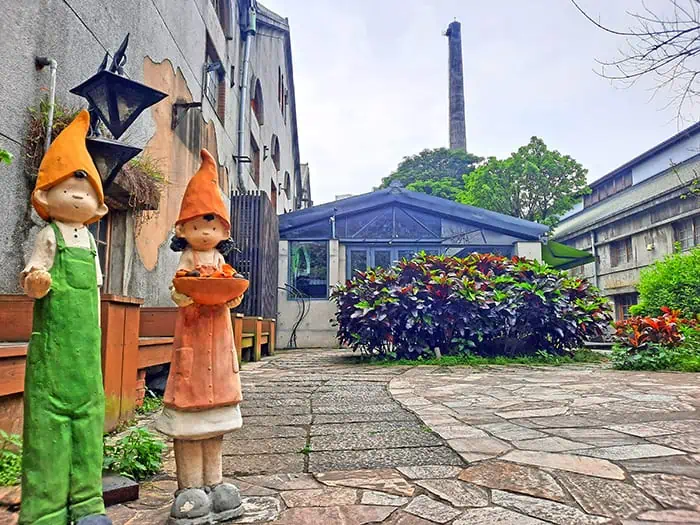
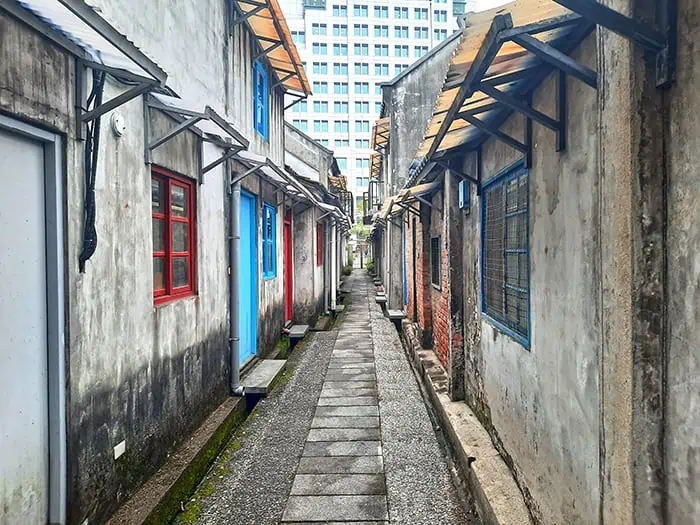
Contrary to what one might think, Houtong’s past as a mining community is still widely visible, with vestiges of its coal industry found anywhere you go. Among them is the former coal dressing plant office, which now serves as the tourist information center. Built in the mid-1930s, it was from where the entire production line and shipments were orchestrated. Fast forward to these days, the financial documents were replaced with cat-oriented leaflets offering tidbits of interesting insights about the hamlet.
Other remnants of the townlet’s bygone era include the well-preserved Ruifang-Ruisan Coal Preparation Plant, the coal transportation bridge, and the defunct mining pit, where visitors can ride a toy train across its claustrophobia-inducing tunnel.
Apart from its industrial relics and ample cat culture, Houtong also has its fair share of natural gems. Running through the very heart of the hamlet is the Keelung River, whose crystal-clear waters are accessible by a steep stairway. In addition, the surrounding wooded mountains are crisscrossed by several hiking trails that meander through the dense forest, which, apart from the unspoiled wilderness, also has a series of Buddhist shrines within its confines.