
With an average of 188 people per square kilometer, Europe is twice as densely populated as Africa and more than three times denser than North and South America. Coupled with its extensive road system and robust airline industry, Europe's high population density makes almost any place on the continent extremely accessible. Nevertheless, a few villages and towns across Europe have managed to remain relatively isolated, just waiting to be explored by the most intrepid travelers.

By: Frank Skidmore
Date: 00:55 20.04.21
Last Update: 03:15 20.01.25
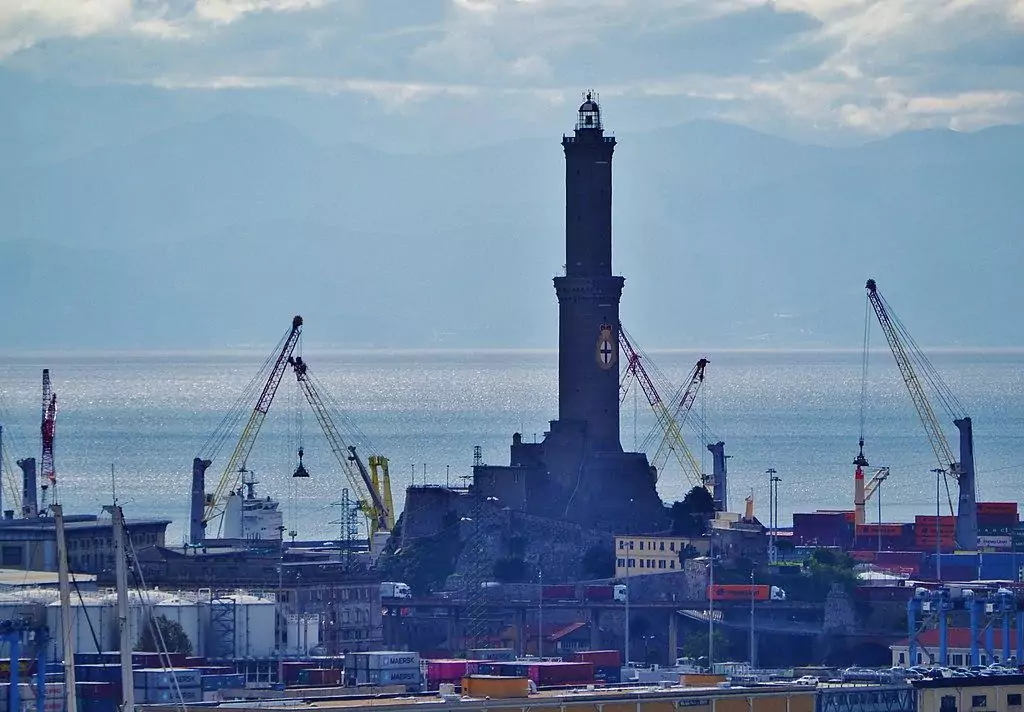
Lying roughly 70 kilometers off the German mainland, Helgoland is the country’s most remote archipelago and home to a modest population of 1,300 people. Despite its remoteness and small size, this pair of islands has played a significant role in shaping history over the last few centuries, including being the birthplace of Germany’s current national anthem, ‘Das Lied der Deutschen.’
Over the years, Helgoland changed hands several times, and in 1890, following 76 years of British rule, Germany swapped its African colony of Zanzibar in return for control of the islands. Their strategic importance made the archipelago an indispensable military asset, which tragically led to heavy bombardments and destruction during World War II, forcing the temporary relocation of all the islanders.
Today, only the island of Hauptinsel is inhabited, while its smaller neighbor, Düne, is partly occupied by Helgoland Airport, with the rest dedicated to eco-tourism. Hauptinsel and its small Frisian-speaking community seasonally attract day visitors who flock to explore its five-story bunker, ample bird colonies, and the breathtaking views of the Lange Anna, a reddish sea stack that dramatically rises above the North Sea. Helgoland is accessible by flight or ferry from several coastal cities in Germany.
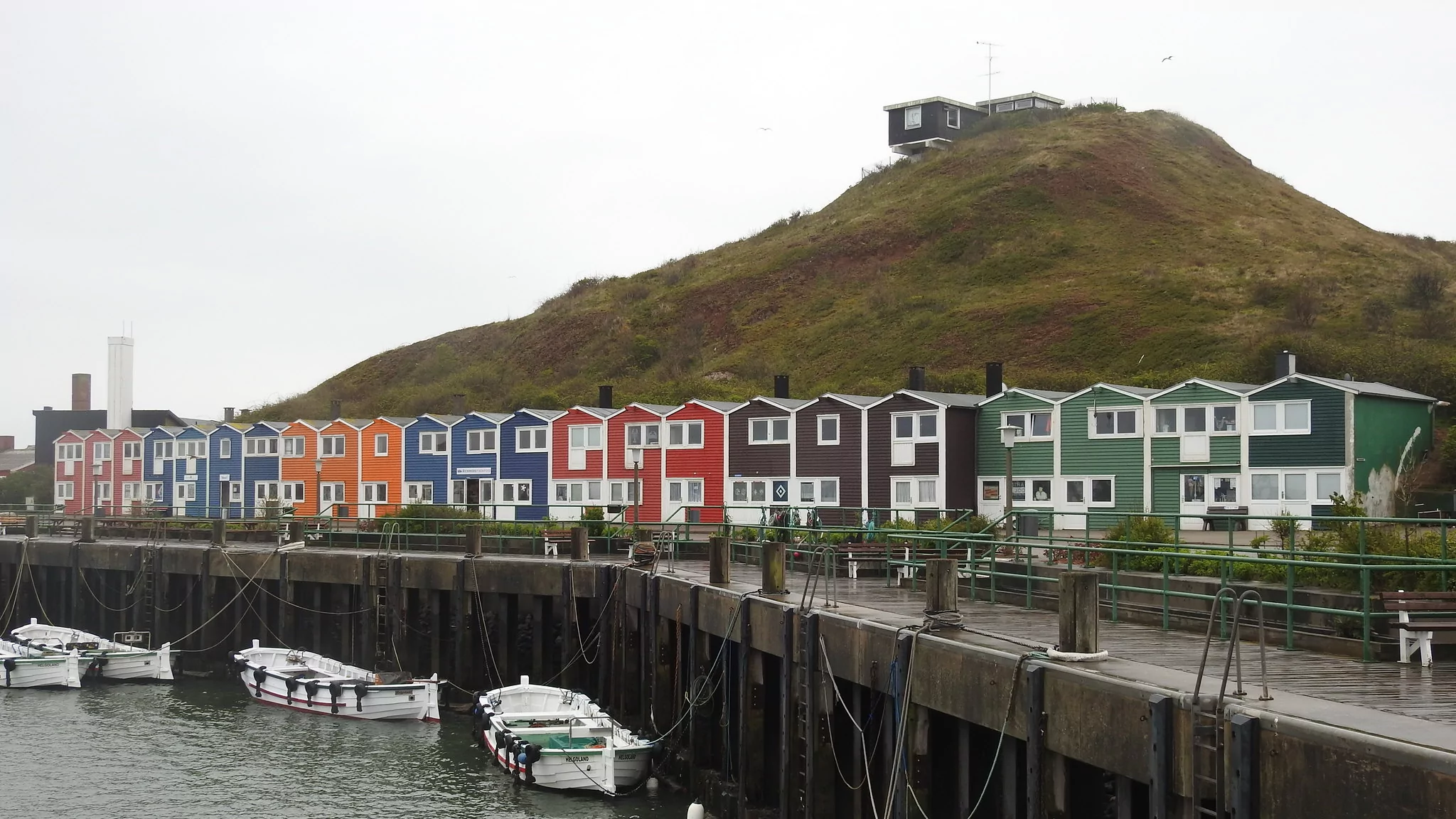
A row of colorful houses along Hafenstraße, Helgoland
photography by: Gertjan van Noord
Tucked away within the massif of Picos de Europa, in the autonomous province of Asturias, the tiny parish of Bulnes is surrounded by formidable mountains and inhabited by merely 22 people. Up until recently, the only way of getting in and out of this isolated village was by a long hike through a winding mountainous path. However, in 2001, the local government constructed a 2.2-kilometer funicular that links Bulnes with the nearby village of Poncebos via a mountain tunnel in just 8 minutes.
Bulnes is often dubbed the most remote village in Spain, and while it’s still true to some extent, the recently built funicular has made it a popular spot among mountaineers and nature lovers, as it serves as a gateway to the surrounding spectacular hiking paths. Renowned for its locally made Cabrales cheese, the isolated village features stone buildings and cobblestone streets, free of any car traffic and pollution, making it a pristine rarity that leaves any traveler jaw-dropped.
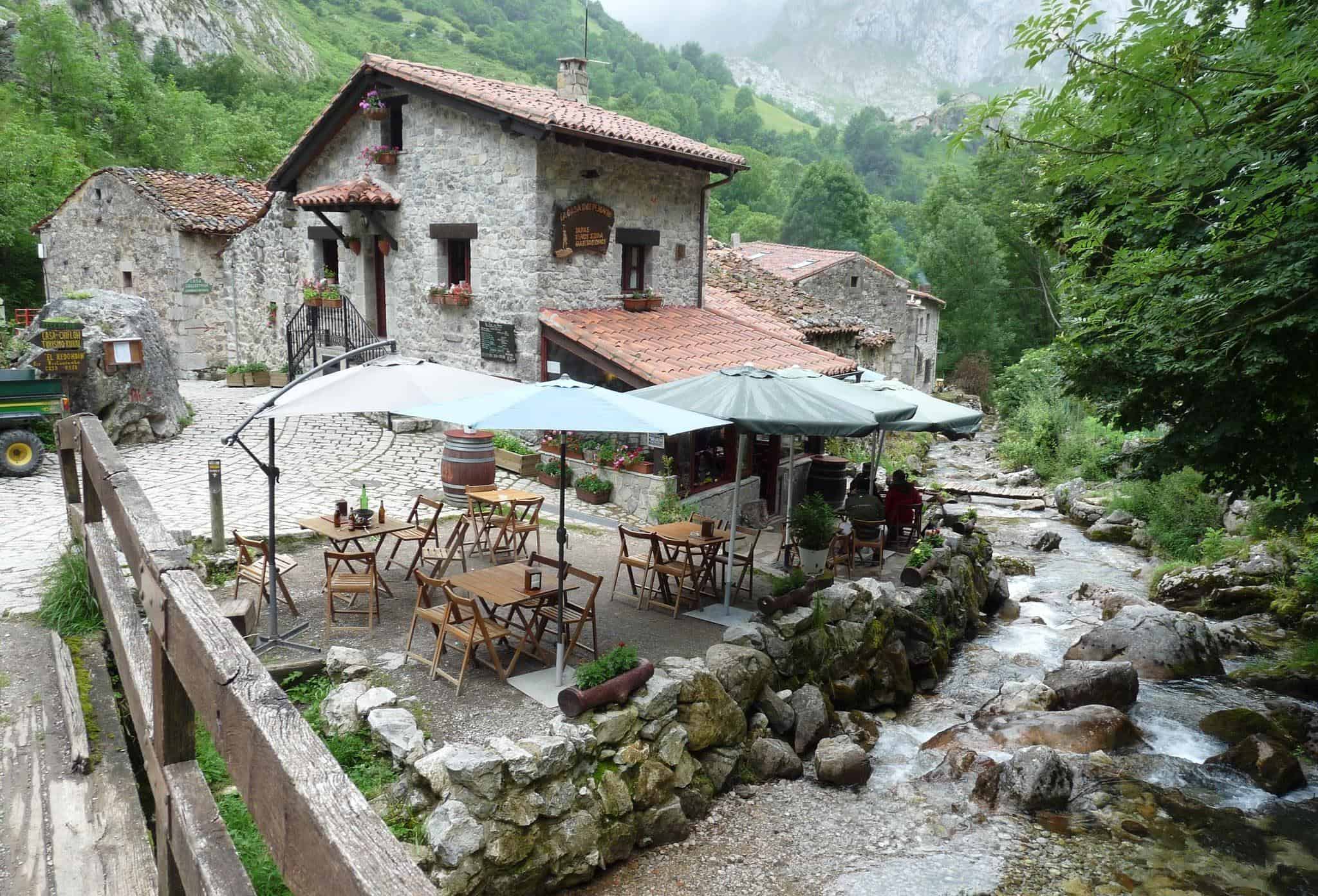
The charming stone houses of Bulnes perching on the riverbank
photography by: blablabla arbliblibli
Nestled amid the Kelet-Mecsek Landscape Protection Area, Óbánya is a pint-sized rural community completely surrounded by untouched forest and linked to the rest of the country by a single narrow road. Following decades of demographic decline, the village’s population stands at around 100 people, most of whom are of Swabian descent, a German-speaking ethnic group that has a significant diaspora in Hungary.
Because of its German legacy and picturesque natural scenery, the village is frequently referred to as the Hungarian Switzerland. Among the hidden gems are the Öreg-patak stream, Csepegő-szikla – a cluster of mossy boulders that enclose a spring, and most notably Ferde-vízesés – a deep forest waterfall that gently cascades through a breathtaking rock formation.
As for the village itself, it has only one street, a church, and even a restaurant that serves locally made dishes. Curiously, the villagers are renowned for their proficient pottery skills; in fact, there are still two multi-generational businesses that export ceramic wares to other countries.
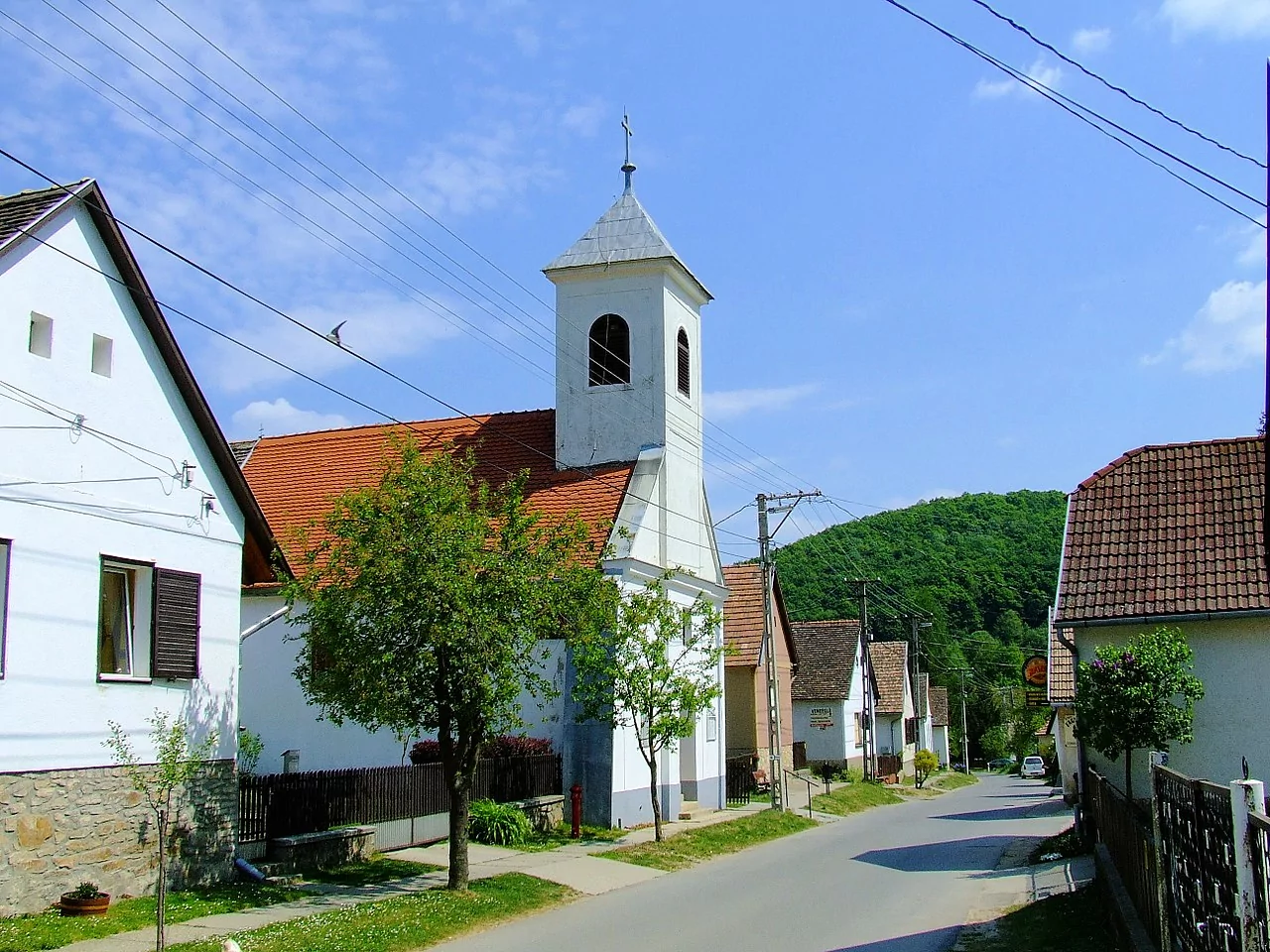
Óbánya's main street
photography by: Csanády
It might come as a surprise, but Ukraine is not dominated solely by endless flat carpets of wheat crops. Evidently, the Carpathian mountain range traverses the country’s southwestern corner, where it borders Romania, Hungary, and Slovakia. This mountainous and forested region is sparsely inhabited, divided into several protected areas and reserves.
Among the few settlements that do exist here is Osmoloda, a remote village that was originally founded in the 19th century as a community of timber loggers. Nestled along the Limnytsya River, considered by many to be the cleanest river in Europe, Osmoloda is split between a downstream center and a completely isolated upstream part, amounting together to merely 60 inhabitants.
Because of its remoteness and lack of proper infrastructure, only a few travelers make it all the way to the village, the vast majority of whom are domestic tourists. With scores of hiking trails entirely free of modern-day nuisances, Osmoloda’s surrounding forest is sprinkled with unusual hideaways, flimsy hanging bridges, and scenic spots. Grofa Landscape Reserve, Lyutoshary marshlands, and Rosokhan Mountain Lake are merely a handful of the charming nooks that await those who venture to this remote part of the country.
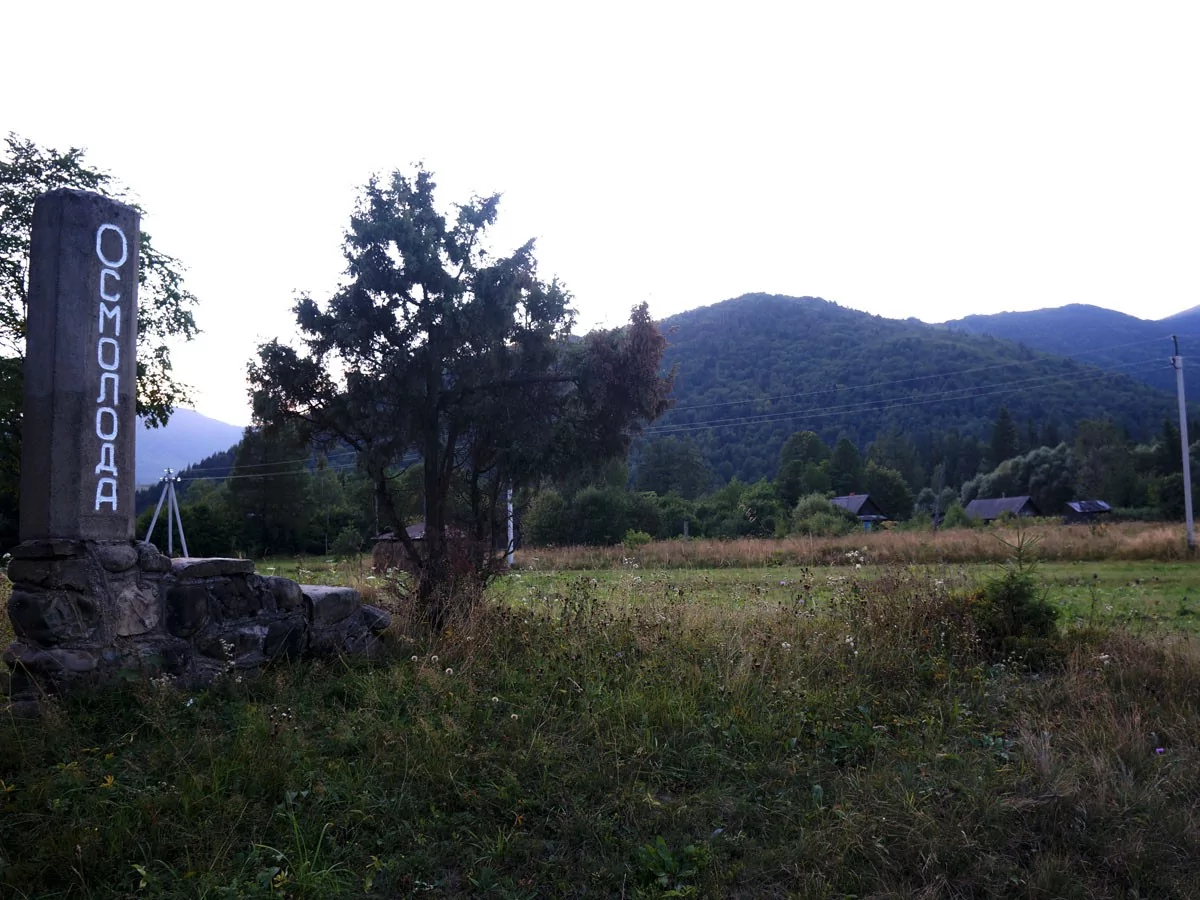
The entrance sign to the village of Osmoloda
photography by: EugeneB
The Faroese archipelago is a small, craggy speck of land halfway between Scotland and Iceland, blessed with awe-inspiring sights of green promontories, sea stacks, and rich wildlife. The territory’s westernmost island, Mykines, is home to one of the nation’s most isolated communities, with which it shares the name. Populated by a measly 10 permanent inhabitants, the village is accessible only by a seasonal ferry ride from Sørvágur Port (from May to August) or a ludicrously expensive helicopter service.
The small village is the island’s sole settlement, peppered with turf-roofed houses that sit along carless streets and bisected by a thin river stream. During the winter months, only 6 of Mykines’ houses are actually inhabited, making it a ghost village for nearly half a year.
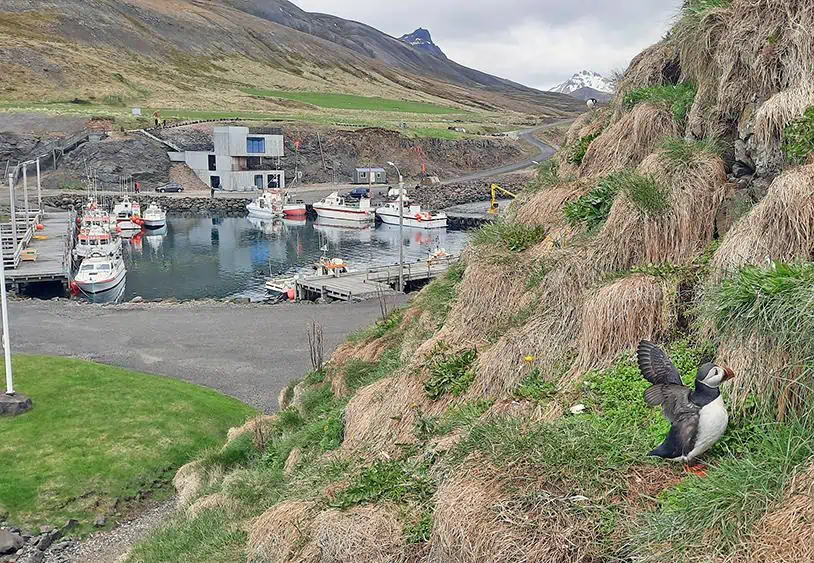
Remarkably, in spite of its inaccessibility, the village still manages to attract thousands of curious travelers each summer, drawn to its ample puffin colony and the Mykines Hólmur Lighthouse at the isle of Mykineshólmur, which is linked to the island by a narrow footbridge spanning over a formidable cleft.
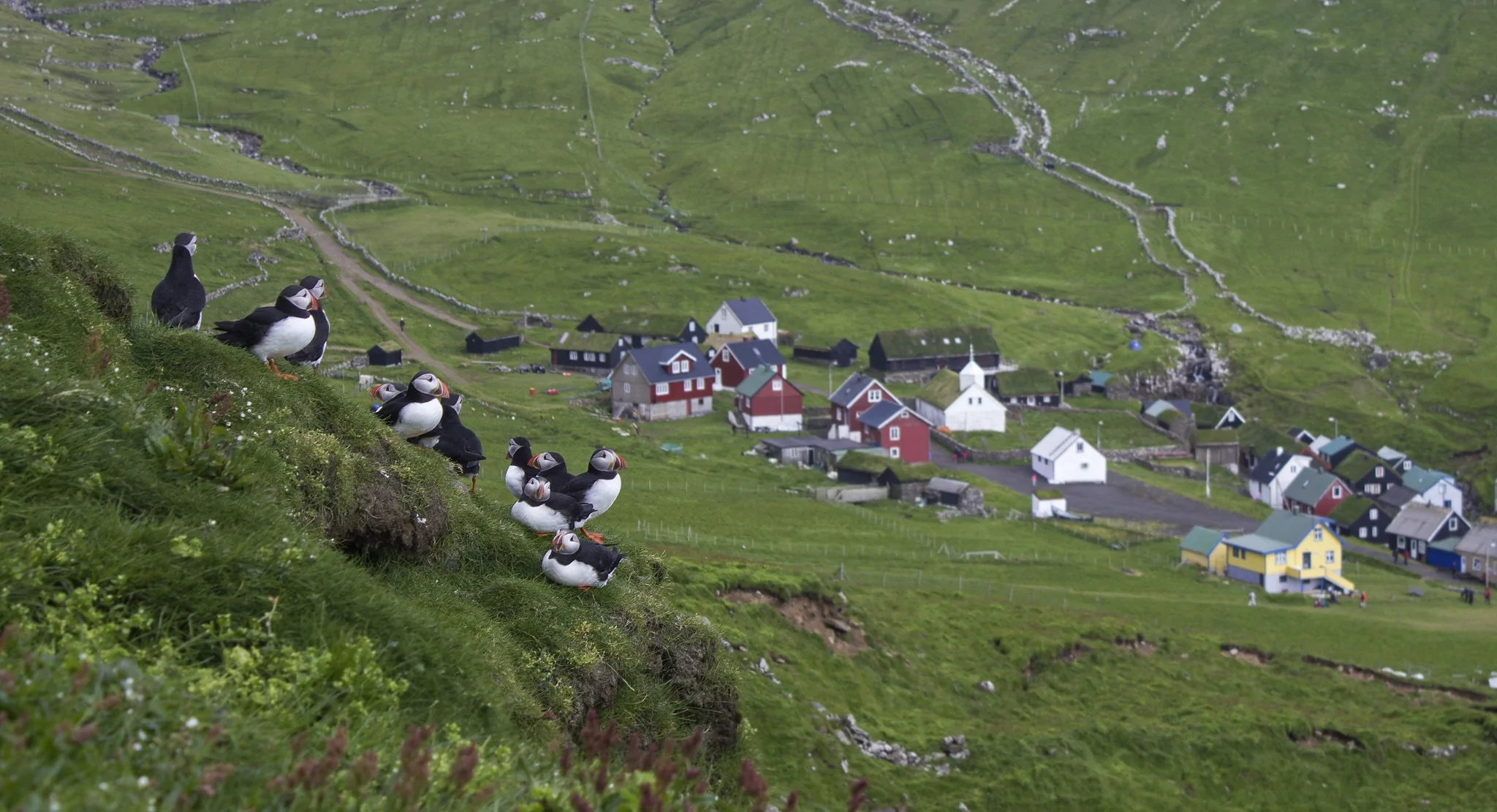
A small group of puffins against the backdrop of Mykines Village
photography by: Arne List
In the far reaches of Norway’s northern county, Troms og Finnmark, lies Veidnes, a remote fishing village of just 50 people, located farther from an urban center than any other settlement in the country. Surrounded by the vast emptiness of Sværholt Peninsula, Veidnes has a post office, a wooden chapel, and a single street—the Fv183 regional road—that astonishingly ends at a dead end in the village, simply because there aren’t any other towns around.
This tiny fishing community perches on the coastline of Laksefjorden Inlet and is fully dependent on its piscary. In fact, in 2016, the Discovery Channel made a whole series about the daily life of the villagers, focusing on a local entrepreneur who opened a fishing farm in an attempt to fight the village’s inevitable demographic decline.
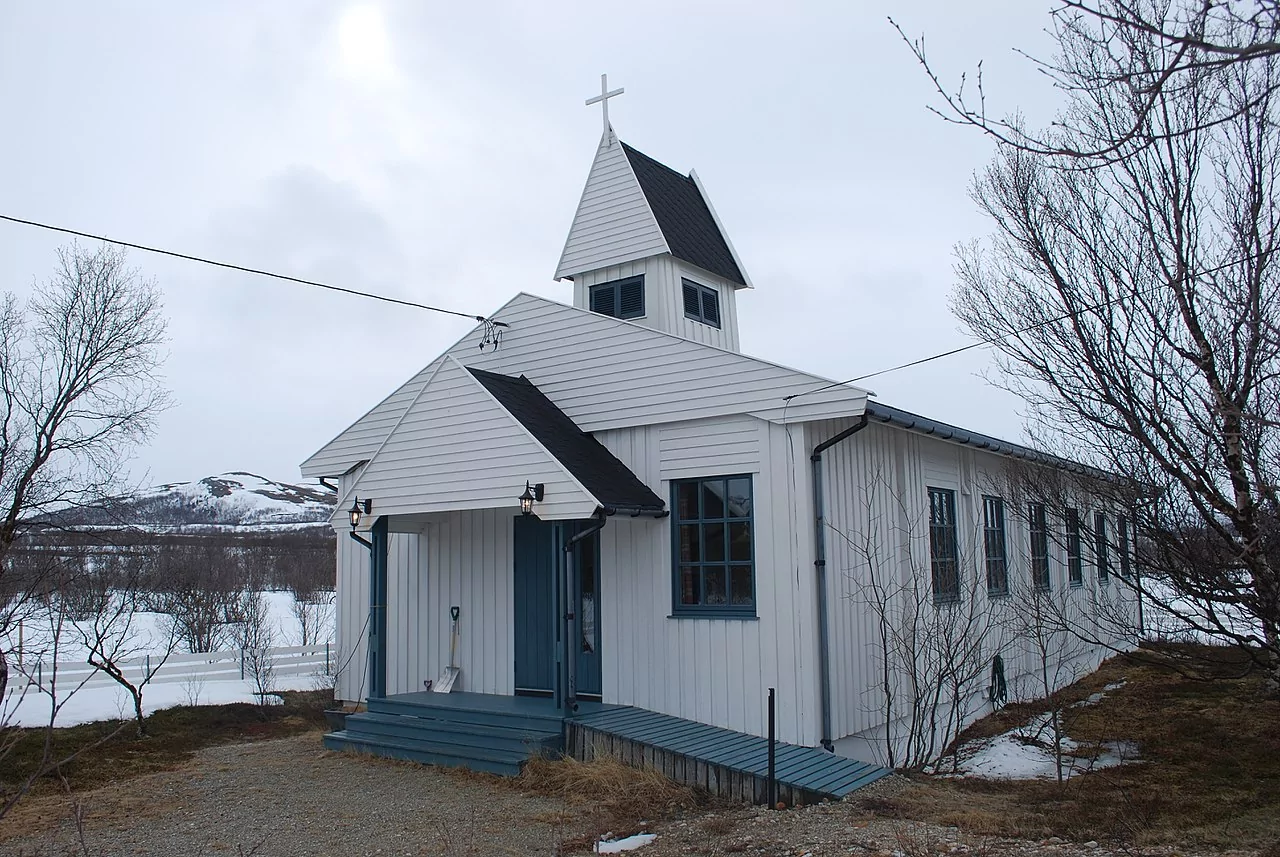
Veidnes wooden chapel
photography by: Helge Høifødt
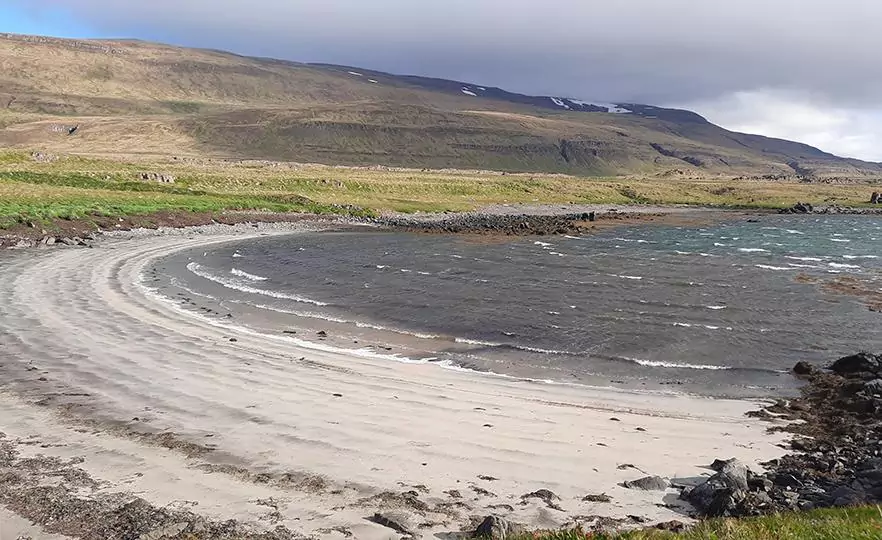
Jutting out into the Greenland Sea, the distant island of Grímsey is the northernmost inhabited place in Iceland, located roughly 40 kilometers off the mainland coast. The island’s only settlement, Sandvík (though it often appears in public maps as Miðgarðar), is home to 60 people, almost all of whom are either fishermen or work in the summer-tourism industry.
Despite its remote location, the island is linked to the rest of the country both by a 3-hour ferry trip from the village of Dalvík and a regular 20-minute flight service from Akureyri, making it fairly accessible for keen adventurers during the summer months. Besides its adorable puffin colony, the island is most renowned for being traversed by the Arctic Circle, marked by a spherical monument a short distance from where it actually passes.
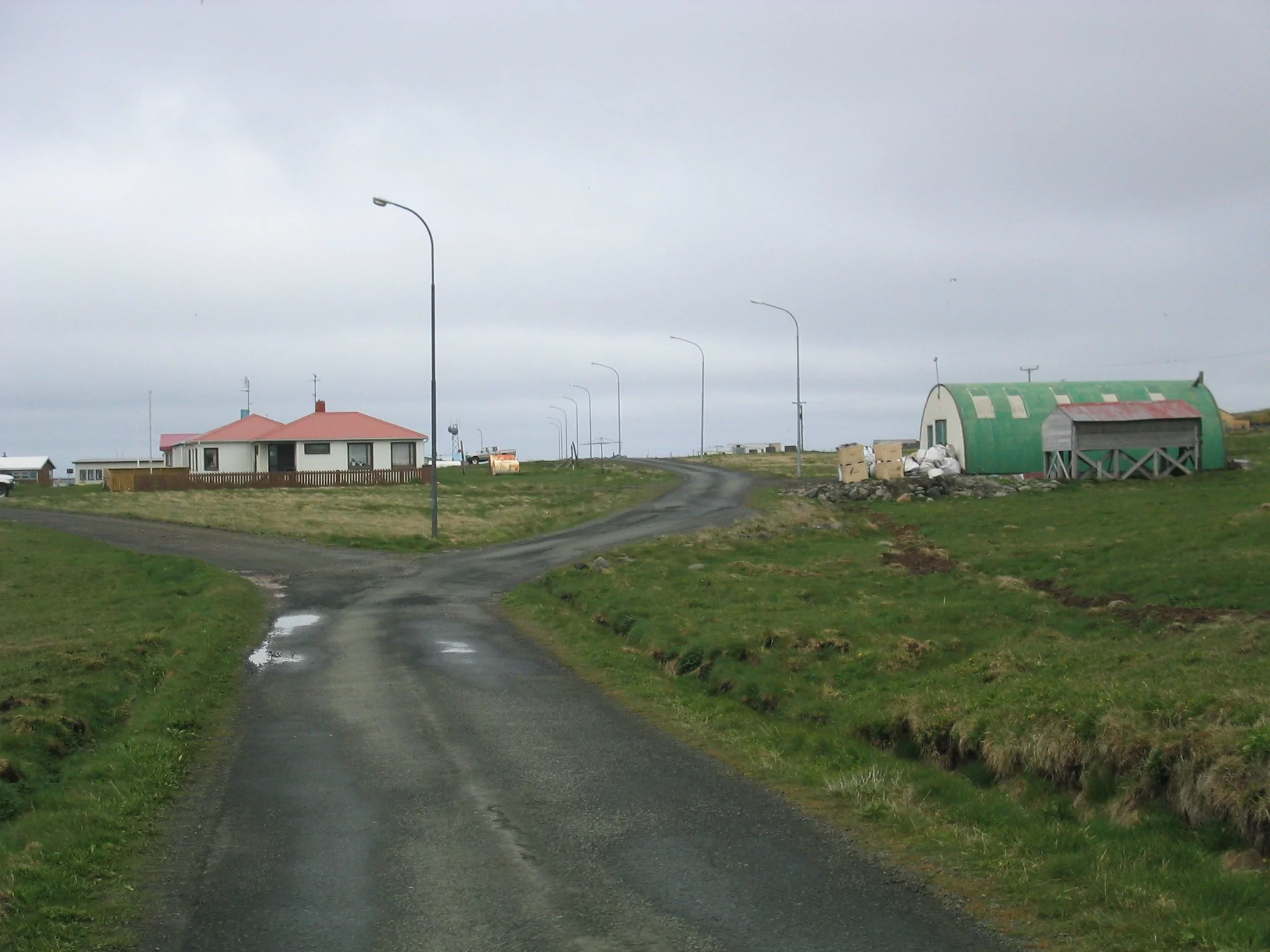
The sparsely populated village of Sandvík
photography by: John Lester
The Scottish village of Inverie is by far Great Britain’s most isolated settlement, strung out along the southern coastline of the Knoydart Peninsula. As a matter of fact, this rural community is not connected to the national road network, leaving only two options for getting there: either by a 2-day foolhardy hike through the mountains or a half-hour ferry trip from Mallaig across Loch Nevis, operated by two companies, Knoydart Seabridge and Western Isles Cruises.
Only 70 people call Inverie home, yet what the village lacks in size, it definitely makes up for in awe-inspiring scenic spots, untouched nature, and sheer tranquility found nowhere else in the country. Interestingly, relative to its size, the village has plenty of amenities, including ultra-luxurious lodges, boat rentals, and a decent assortment of dining places, most notably “The Old Forge,” recognized by the Guinness Book of Records as the most remote pub in the UK.
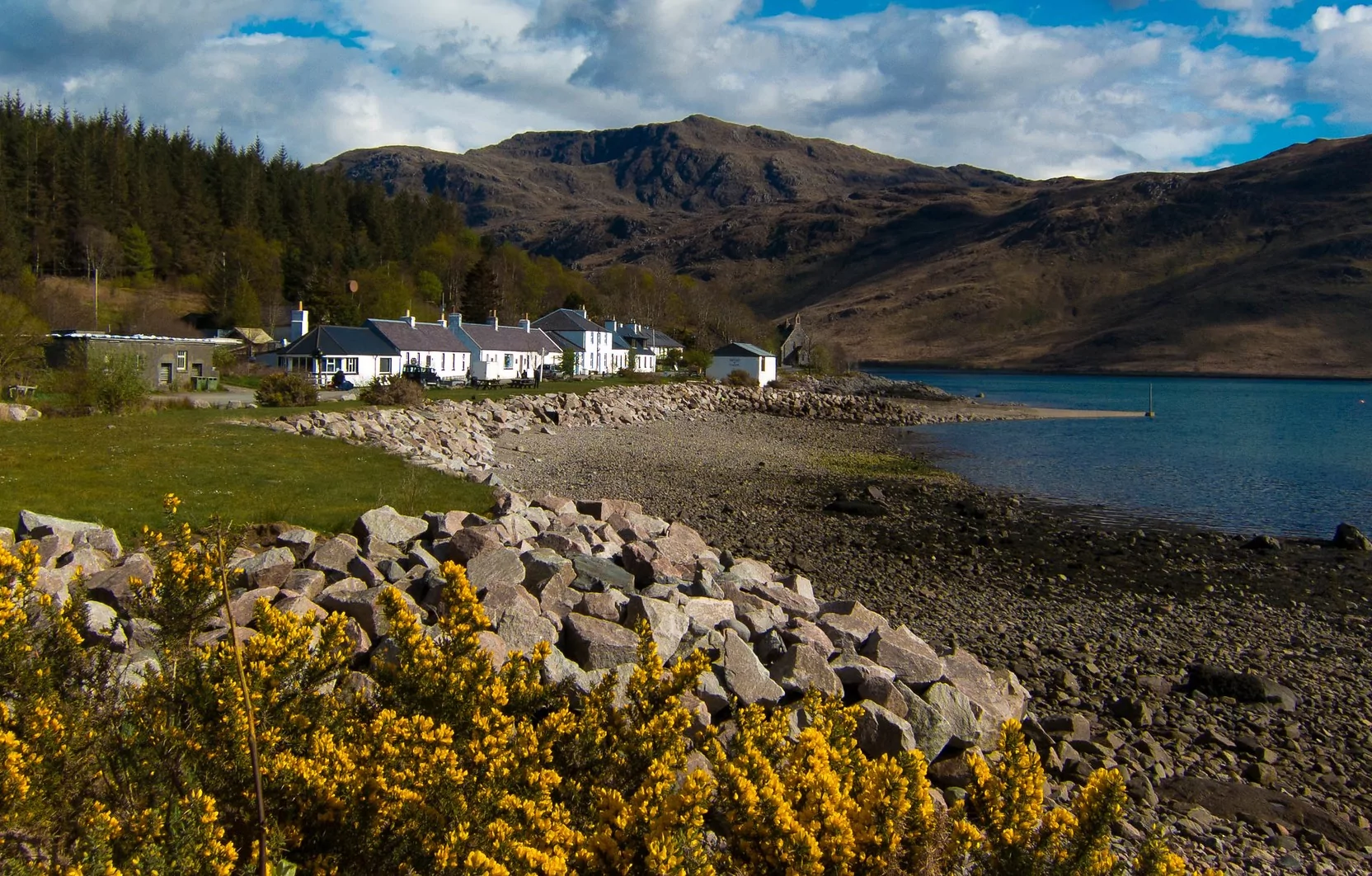
Inverie's handful of homes
photography by: Stefan Magdalinski
Russia is by far the largest country on Earth as well as one of the most sparsely populated nations. As such, it has dozens of the world’s most isolated settlements, the bulk of which are concentrated in its less populated Asian part. Nevertheless, lying in the country’s Novaya Zemlya Arctic archipelago, still within the official boundaries of Europe, Belushya Guba justly rivals for the dubious title of being Russia’s most remote inhabited place.
Nestled on Yuzhny Island’s Gusinaya Zemlya Peninsula, Belushya Guba was founded in the 19th century as a Russian outpost. It ultimately developed as a military-oriented town in the mid-1950s, when the island became a nuclear test site, where the most massive man-made explosion in history took place, following the detonation of the Tsar Bomba. As of 2020, most of the town’s 2,700 inhabitants are still military personnel. Furthermore, visiting the archipelago is restricted and requires special governmental permission.
If you do manage to get here, you’ll find a gritty place where temperatures can get as low as -18 °C during the winter, albeit it’s not enough to deter the scores of polar bears who frequently raid the town’s dumping site for lunch.
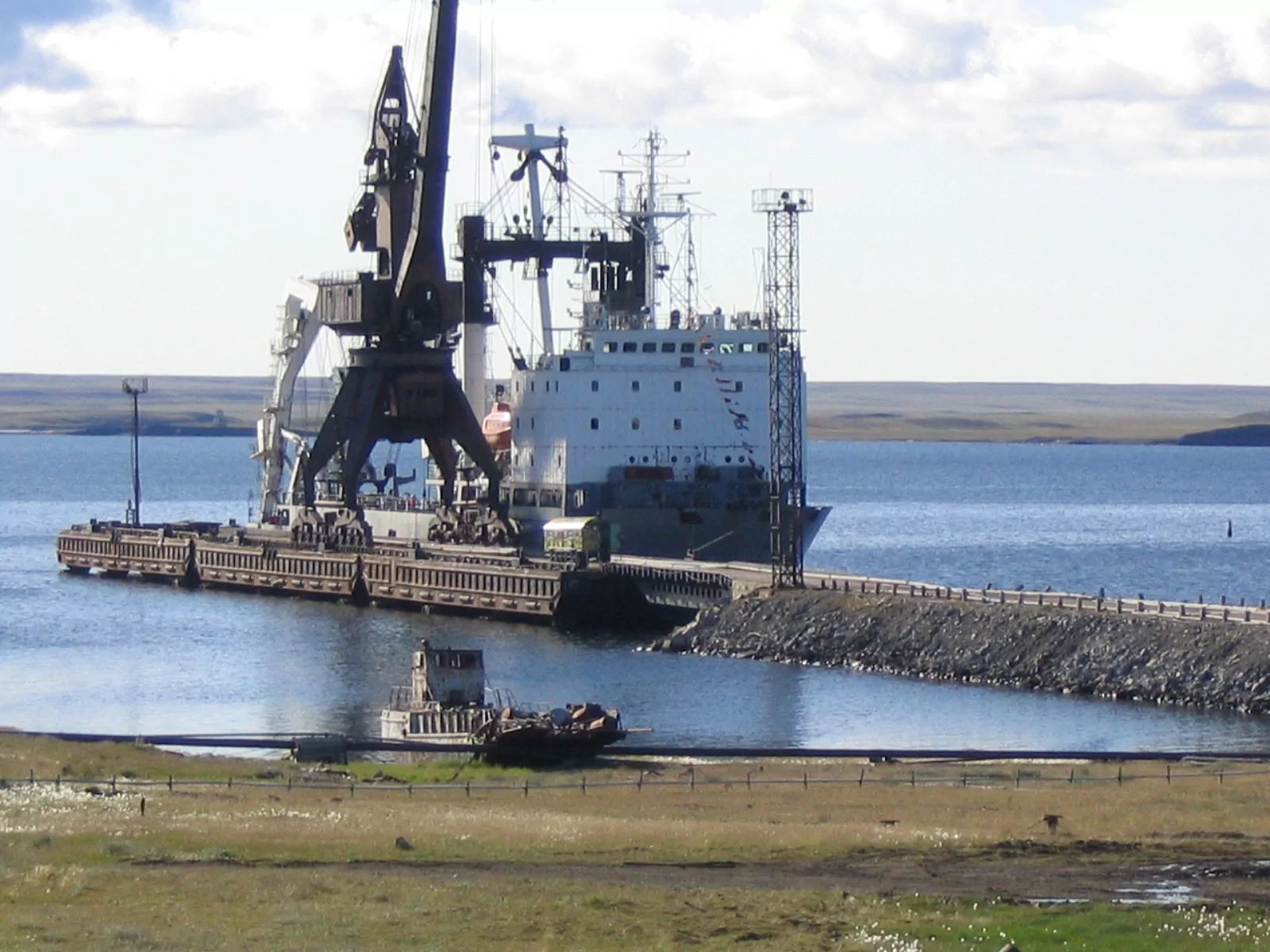
Belushya Guba's sole pier
photography by: Vasilyev Serge
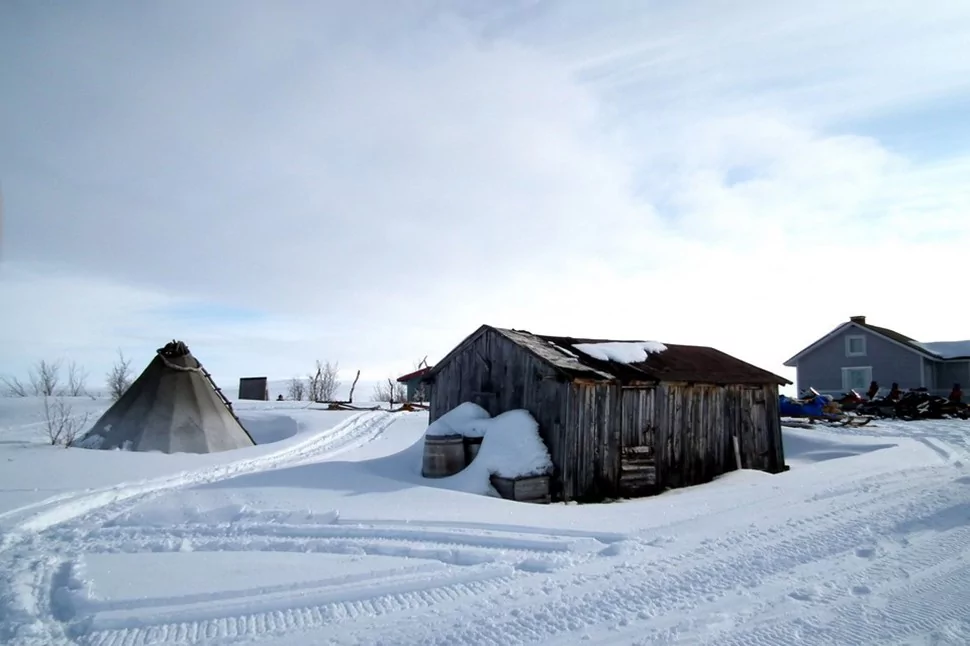
Devoid of roads, shops, and anything else that constitutes our modern way of life, Raittijärvi is practically a cluster of wooden houses in the very center of Finland’s frozen wasteland, roughly 12 kilometers from the border with Norway.
Located more than 30 kilometers from the nearest settlement, this isolated Sámi village has only ten houses, none of which are inhabited year-round, though usually at least one villager is present in Raittijärvi at any given moment.
This rural community’s main livelihood revolves mostly around reindeer herding, as the climate is too hostile for any form of agriculture. Surprisingly, there are also a few seasonal tourists who make the long, treacherous journey, and since there aren’t any roads to and from the village, that entails crossing a 40-kilometer dirt pathway either by ATV or, alternatively, a more traditional dog sled.
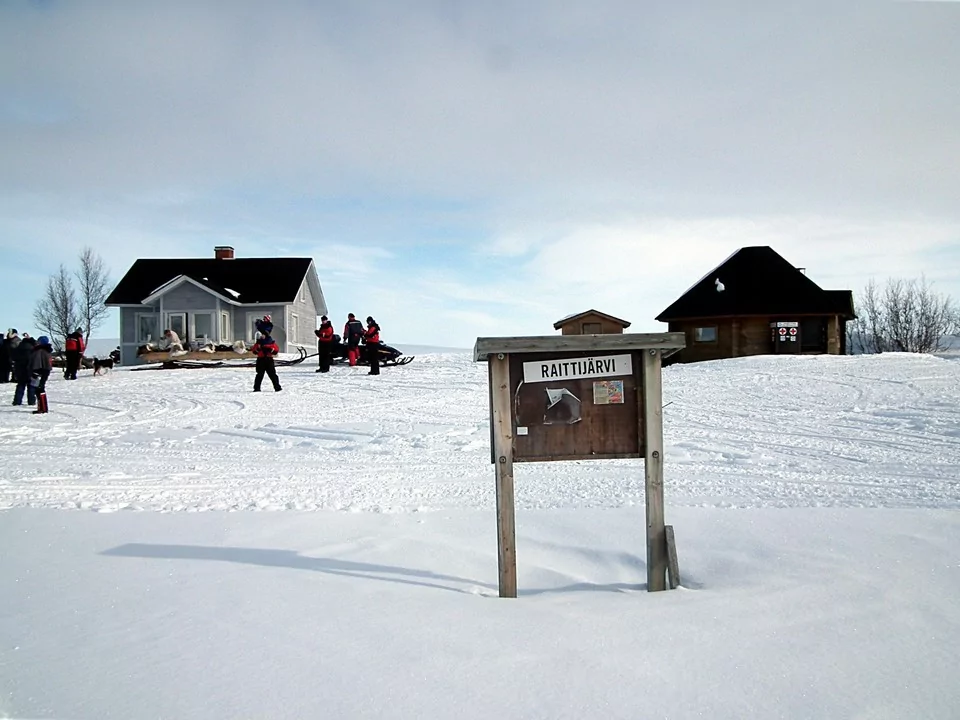
Raittijärvi and its wooden entrance sign
photography by: Niko Lipsanen/ travel.domnik.net