
Seychelles’ third most populous and fourth-largest island, La Digue is renowned for its world-class beaches and thriving tortoise population. With no road traffic or mass tourism, it remains a peaceful sanctuary where nature takes center stage. But beyond its famous white sands and crystal-clear waters, the island also abounds with interesting places to explore, scrumptious eats, secluded coves, and historical relics.

By: Omri Westmark
Date: 02:01 13.04.21
Last Update: 22:56 05.02.25
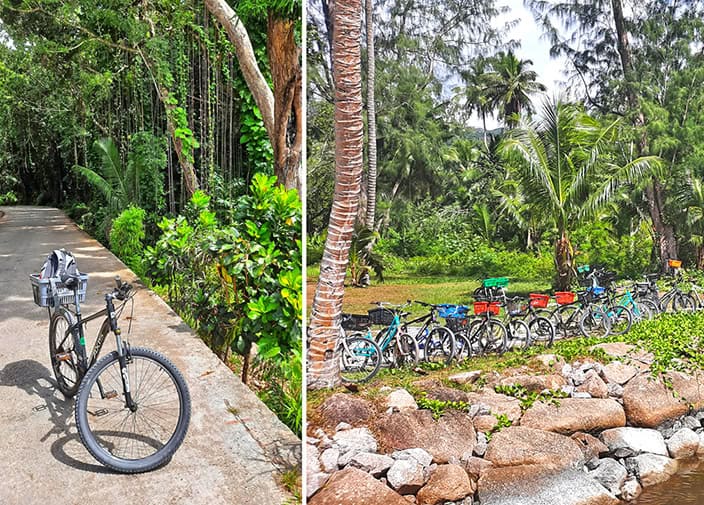
While its larger sibling, Mahé, is crisscrossed by an extensive road network, La Digue remains a sanctuary where time slows, and the hum of engines yields to the gentle whirr of bicycle wheels. Historically, the island eschewed motorized vehicles, fostering a culture where bicycles reigned supreme, though a few cars have since made their way onto its shores.
As visitors step off the ferry, they are greeted almost immediately by friendly locals offering bicycle rentals, with prices typically ranging from $5 to $10 per day. Some shops, like Tati’s Bicycle Rental, are situated directly at the jetty, providing a seamless transition from sea to cycle.
The island boasts a network of well-maintained paths, ideal for meandering through its lush landscapes and along pristine coastlines. However, as you approach the more secluded beaches, be prepared to traverse sandy trails where cycling becomes a challenge. For this reason, wearing proper footwear is highly advisable, as the midday sun can render the sands quite hot, making barefoot walks less enjoyable.
A visit to L’Union Estate (next on our list) allows riders to pedal their way around historic landmarks, including a traditional copra mill and a vanilla plantation, both integral parts of the island’s heritage.
Local islanders argue that embracing the island’s preferred mode of transport not only aligns with its eco-friendly ethos but also provides an intimate lens through which to experience the serene beauty that defines La Digue.
photography by: Omri Westmark
While every beach on La Digue radiates breathtaking beauty, Anse Source d’Argent seems to stand in a league of its own.
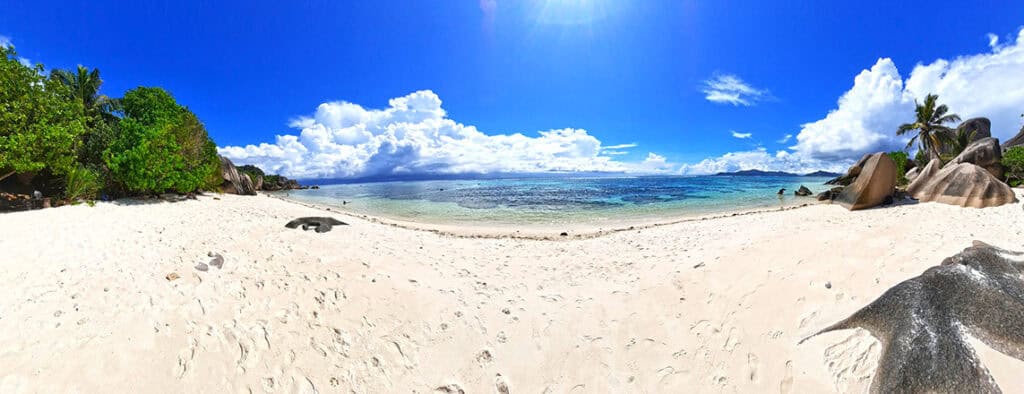
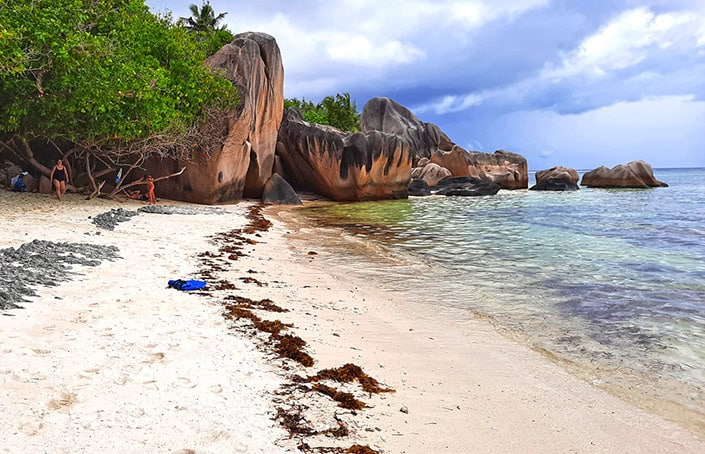
Massive granite boulders, worn into surreal, almost liquid-like formations, rise from the sand like the ruins of an ancient civilization. Between them, ribbons of powdery white sand spill into crystalline, shallow waters that shimmer with turquoise hues. It’s no wonder this otherworldly setting has become one of the most photographed beaches on Earth.
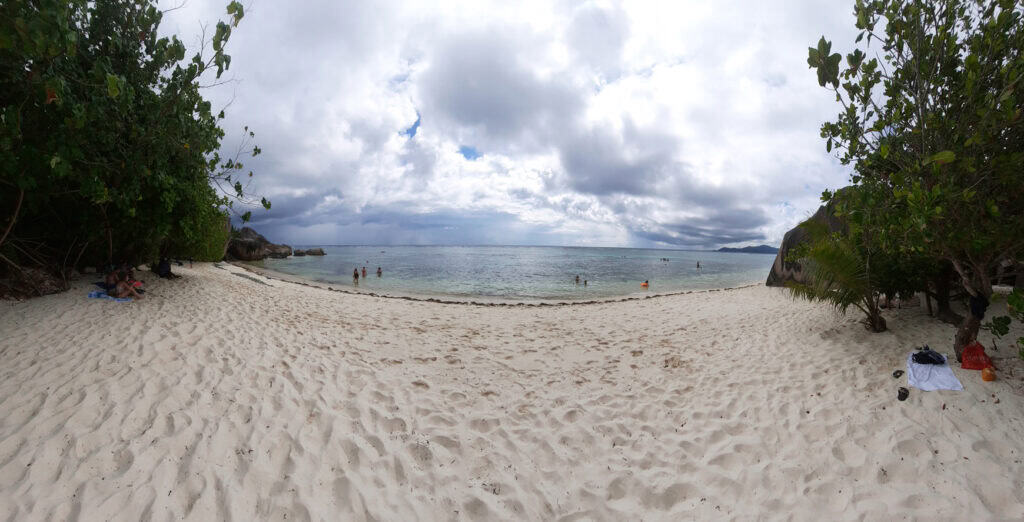
The waters here are calm and shallow, protected by an offshore reef that keeps the waves at bay. At low tide, the ocean retreats just enough to reveal hidden sandbanks and tide pools teeming with marine life. Despite its ethereal tranquility, Anse Source d’Argent can become a magnet for visitors, especially around midday when the sun casts dramatic shadows across the boulders. To avoid the crowds, visit early in the morning or around sunset.
Though the beach is consistently pristine, seasonal seaweed occasionally washes ashore, momentarily covering the golden sand, yet its charm remains intact.
Access to Anse Source d’Argent is solely through L’Union Estate, a former coconut and vanilla plantation that now serves as a nature reserve. Visitors must pay an entrance fee of 115 Seychellois Rupees (about $8 USD) to enter the estate and reach the beach.
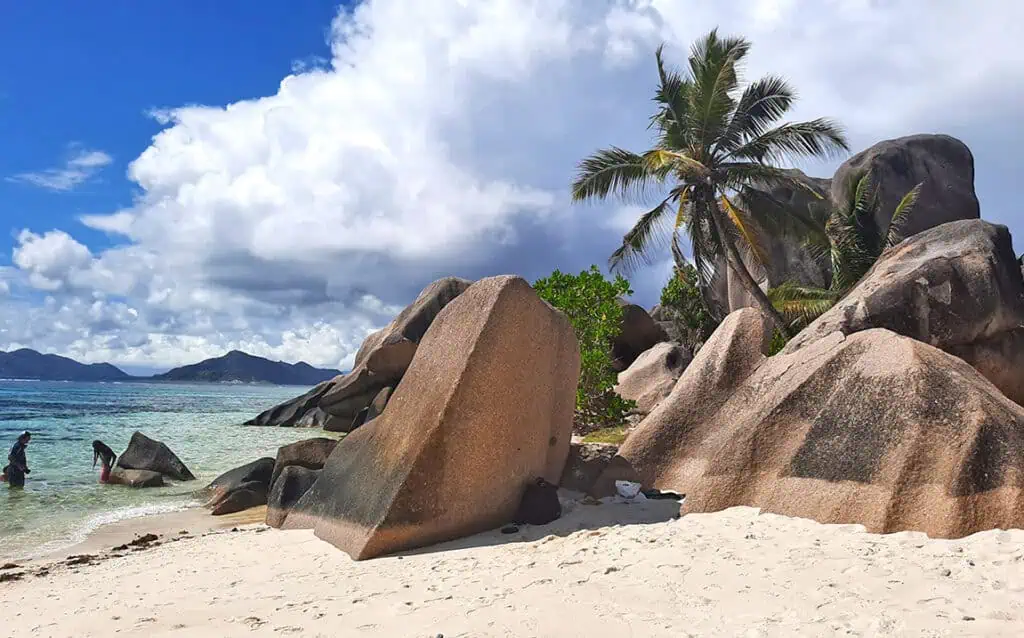
The beach’s famous granite boulders
photography by: Omri Westmark
photography by: Omri Westmark
photography by: Omri Westmark
photography by: Omri Westmark
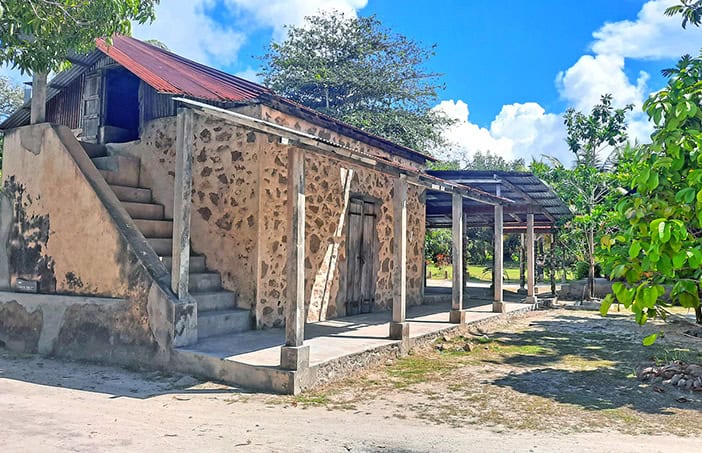
Tucked along the island’s west coast, L’Union Estate Park is a time capsule of colonial history. Once a thriving coconut and vanilla plantation, the estate preserves a bygone era with its traditional copra mill, where an ox-powered press still demonstrates the age-old craft of extracting coconut oil from dried flesh.
At its heart stands the Plantation House, an eye-catching example of 19th-century French colonial architecture. Built from rare timber and crowned with palm leaves, the house once sheltered a wealthy Mauritian family before gaining fame as a filming location for Goodbye Emmanuelle.
Nearby, the estate’s old cemetery holds the remains of La Digue’s earliest settlers, while Aldabra giant tortoises lumber in their enclosure, living relics of the archipelago’s prehistoric past. Towering over the landscape is the Union Giant Rock, a 40-meter-tall granite monolith estimated to be around 700 million years old.
Throughout the estate, breadfruit trees attract various wildlife, including bats and birds. Locals often harvest breadfruit to prepare Creole delicacies, such as breadfruit croquettes.
Today, parts of L’Union Estate continue to cultivate vanilla and sugarcane. A souvenir shop within the estate offers locally produced vanilla products, while further afield, La Digue’s helipad, operated by Zil Air, provides aerial taxi services and scenic flights for visitors.
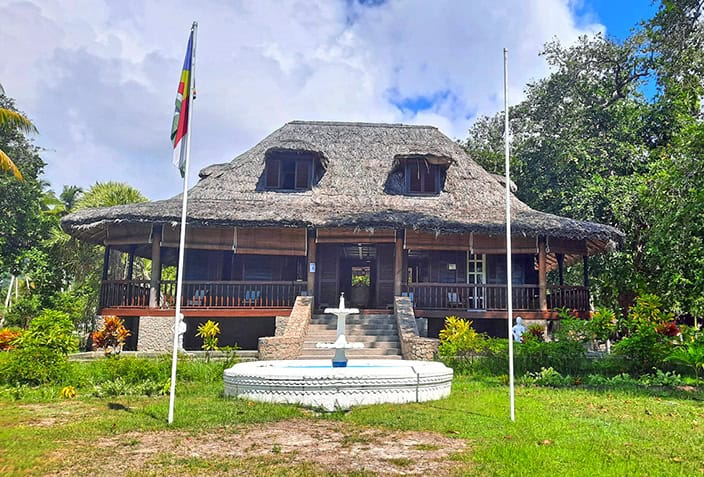
The site’s Plantation House
photography by: Omri Westmark
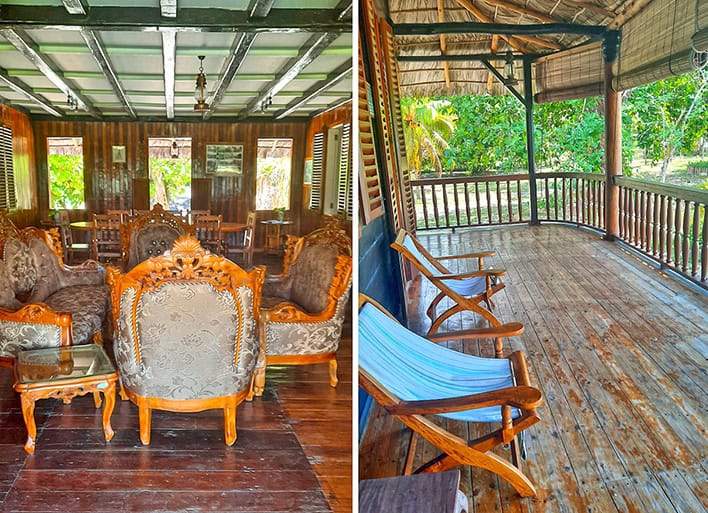
Inside the house
photography by: Omri Westmark
photography by: Omri Westmark
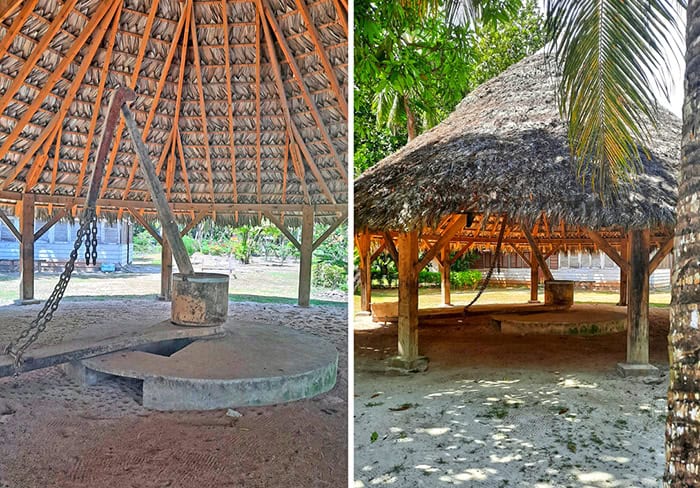
The estate’s copra mill
photography by: Omri Westmark
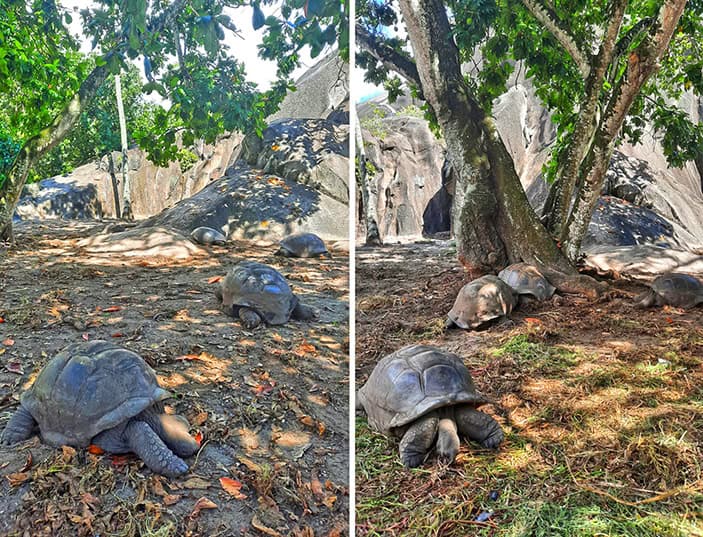
The tortoise farm
photography by: Omri Westmark
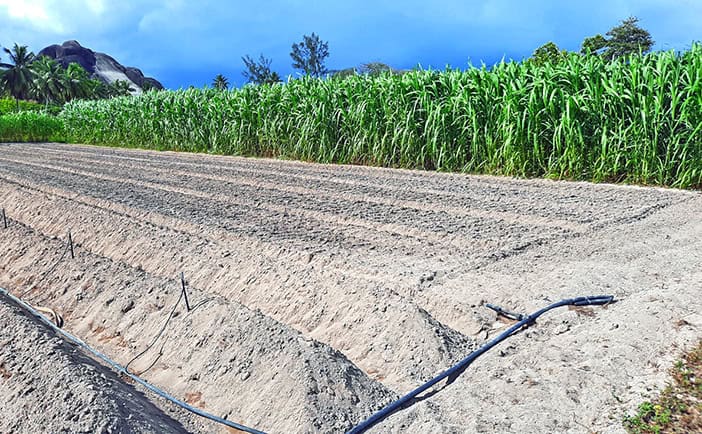
The estate’s sugarcane fields
photography by: Omri Westmark
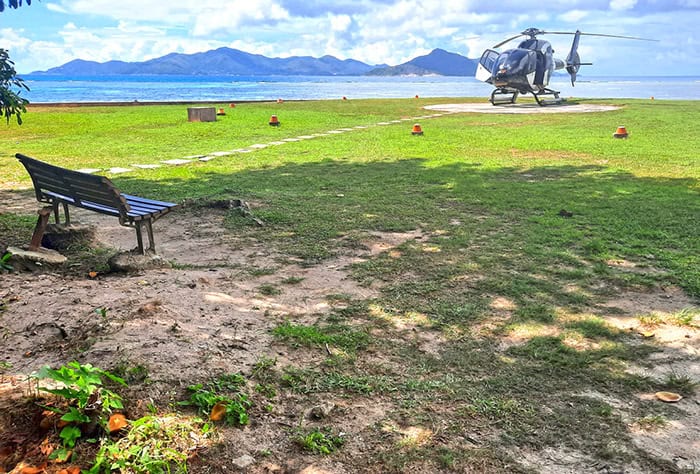
The nearby heliport
photography by: Omri Westmark
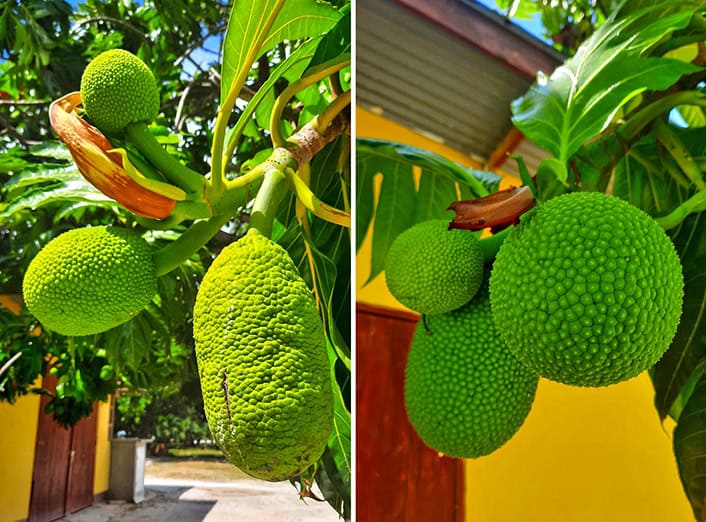
A breadfruit tree
photography by: Omri Westmark
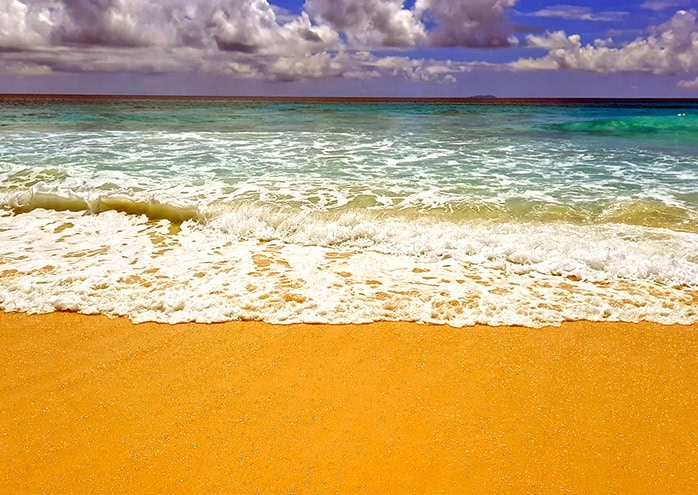
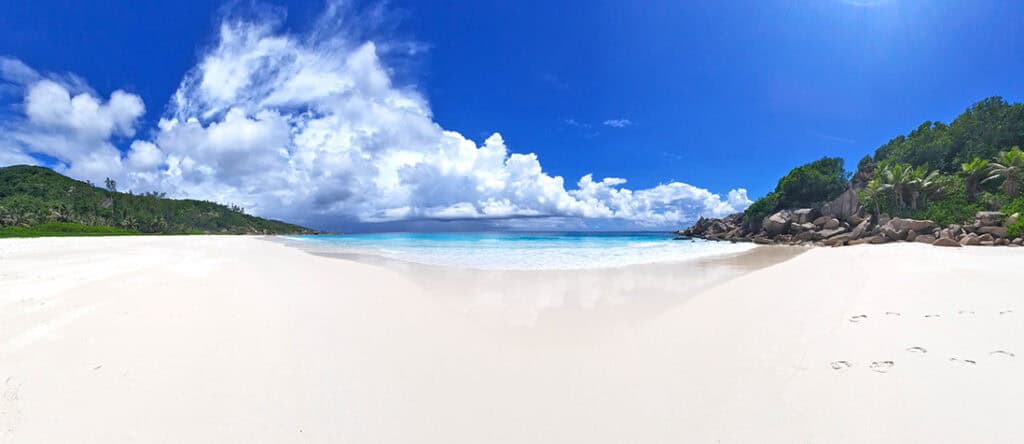
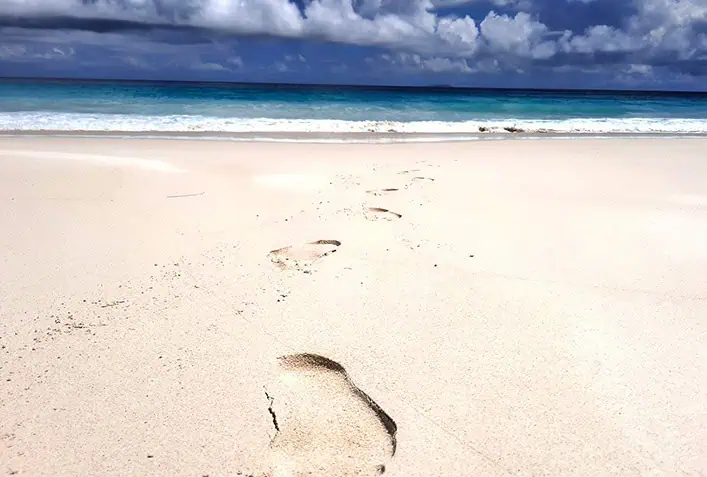
Another contender for the coveted title of “the world’s most picturesque beach” is Grand Anse, a vast expanse of soft sand lapped by emerald-blue waters on the island’s eastern coast. Its untouched beauty is deceptive, as the absence of a protective coral reef means powerful currents and steep drop-offs make swimming here somewhat risky.
Yet, for those content to admire rather than dive in, Grand Anse offers a near-mystical sense of serenity, its raw energy softened only by the whisper of the wind through palm fronds. Basic facilities around Grand Anse include a restaurant and restrooms.
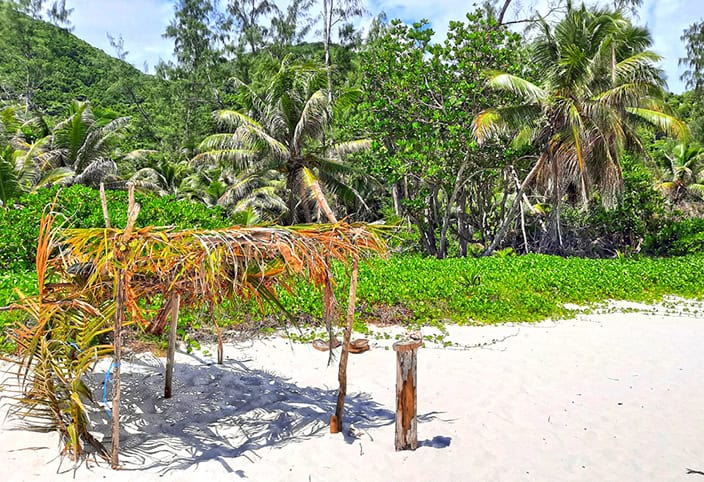
To the north, a short, well-marked trail leads to its quieter sibling, Petite Anse. This lesser-visited cove, a near-perfect crescent of bleached sand, is actually similar in size to its southern counterpart, despite its name. Though its waters experience the same unpredictable conditions, its sheer isolation makes it a worthy detour. Vendors occasionally construct makeshift shelters from palm fronds, but amenities are sparse. Those who venture here should bring their own water and snacks.
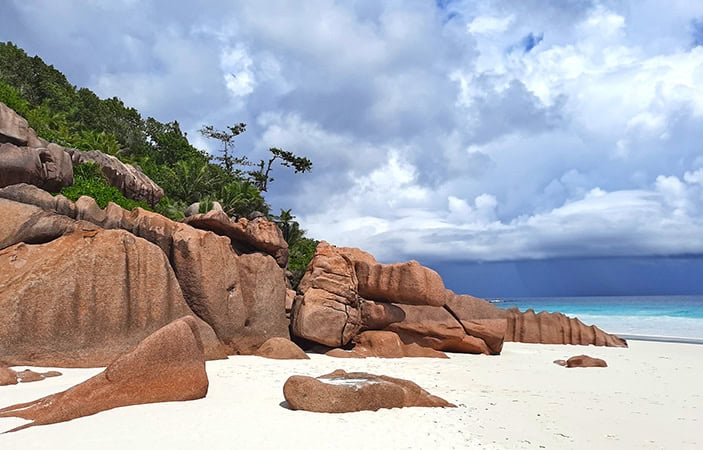
While the equatorial sun can be relentless, both beaches are framed by massive granite monoliths that cradle shadowy recesses, offering a much-needed respite. Sunbathers are far from the only earthlings to enjoy their shade, as these boulders also provide shelter for scuttling crabs, reptiles, and seabirds.
To preserve this wild paradise, visitors are urged to follow “leave no trace” principles. After all, places like Grand Anse and Petite Anse don’t just exist - they endure, provided we let them.
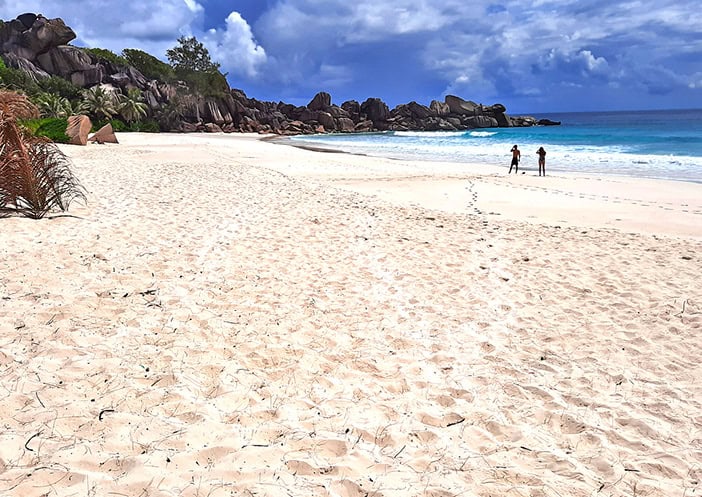
Grand Anse
photography by: Omri Westmark
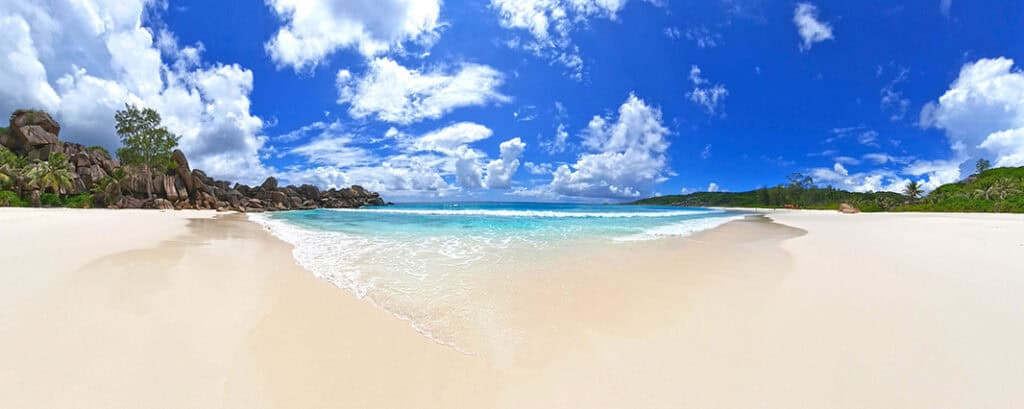
photography by: Omri Westmark
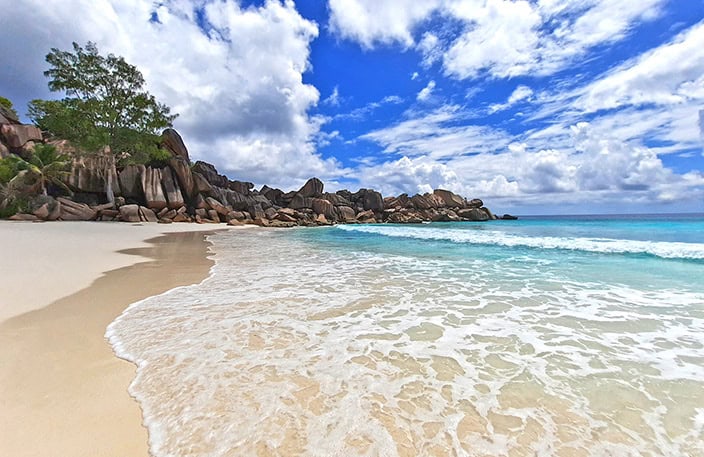
photography by: Omri Westmark
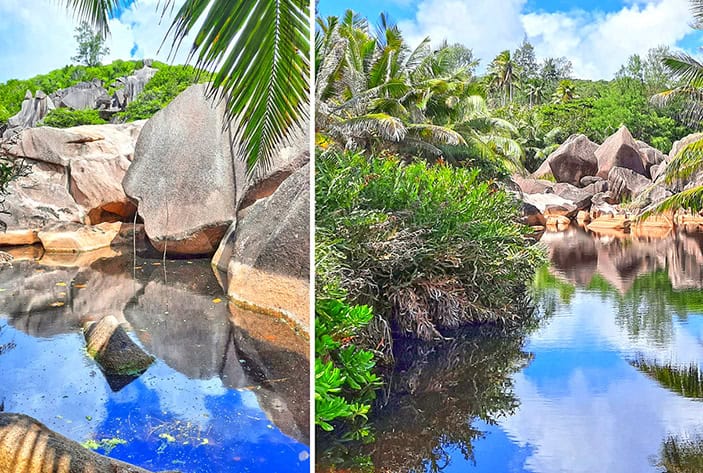
A marshland near Grand Anse
photography by: Omri Westmark
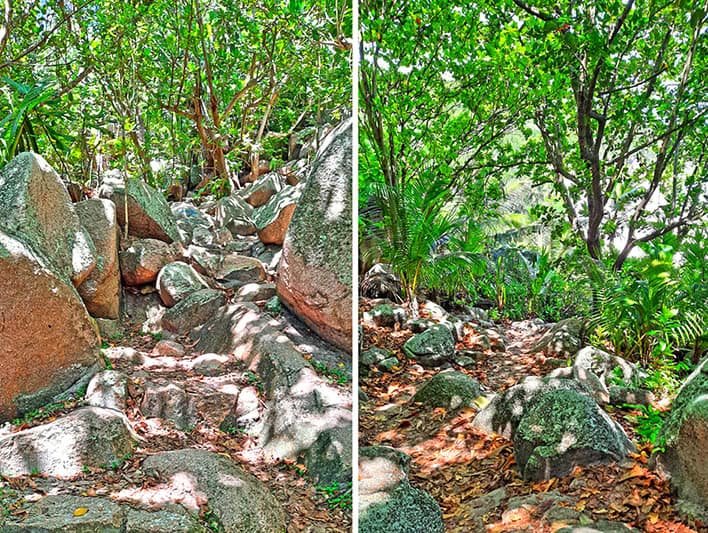
The wooded trail between the two beaches
photography by: Omri Westmark
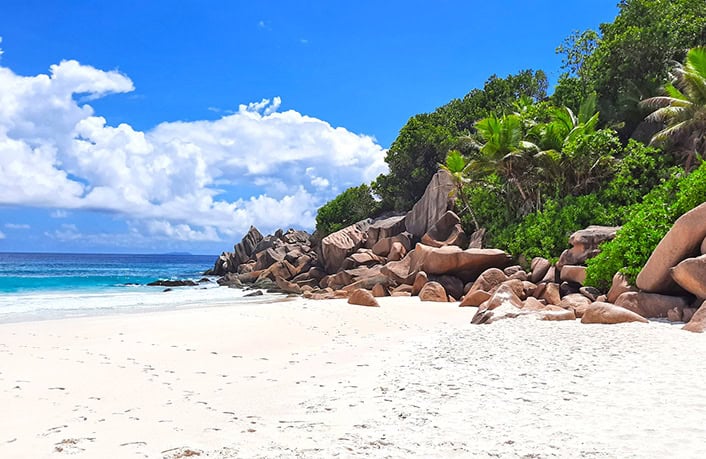
Petite Anse
photography by: Omri Westmark
photography by: Omri Westmark
photography by: Omri Westmark
photography by: Omri Westmark
photography by: Omri Westmark
photography by: Omri Westmark
La Digue, the fourth-largest granitic island in the Seychelles archipelago, offers a diverse dining scene catering to all palates. The island’s growing number of visitors in recent years has led, in turn, to the expansion of local eateries and bars, with new spots emerging regularly.
One prominent establishment is Fish Trap, located near the inter-island ferry port. This restaurant specializes in fresh, locally sourced dishes, with highlights like shrimp salad garnished with orange slices for a perfect balance of sweetness and tang. The menu is also awash with Creole favorites, abundant seafood, and international staples such as burgers and pasta. Their cocktails, particularly those infused with local rum, come highly recommended.
For Italian cuisine, Le Repaire Restaurant, part of a boutique hotel, offers beachfront dining as well as a lush garden seating area. Its wood-fired prosciutto pizza, known for its flavorful crust, is among the most popular.
For an upscale experience, Combava Restaurant, perched on the upper deck of the all-day dining area at Le Domaine de L’Orangeraie hotel, boasts a stately roof terrace lounge with an à la carte menu. The menu includes artistically crafted seafood dishes made with premium local produce.
For a refreshing midday treat, fresh smoothies made from local papayas, coconuts, or mangoes are widely available. Alternatively, cold coffee is an option, though it’s best to request sugar syrup on the side, as the local version tends to be exceedingly sweet.
Across the island, beach vendors offer coconuts cut open and sprinkled with a lemon-flavored powder, an invigorating way to quench your thirst. Hidden within the shoreline’s lush greenery, beach stands sell various sliced fruits and freshly picked coconuts, which, upon request, can be peppered with local rum, best enjoyed while gazing at the ocean.
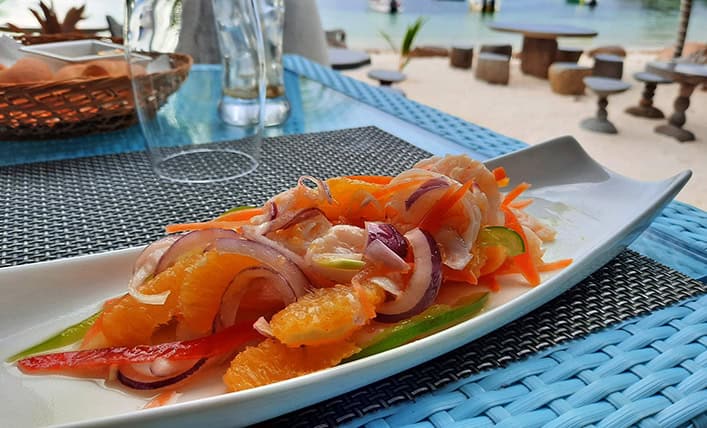
A shrimp salad at Fish Trap
photography by: Omri Westmark
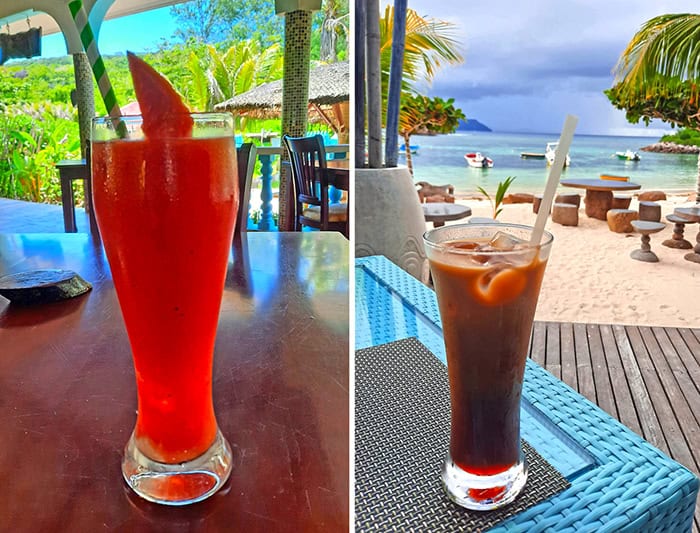
A papaya smoothie and cold coffee
photography by: Omri Westmark
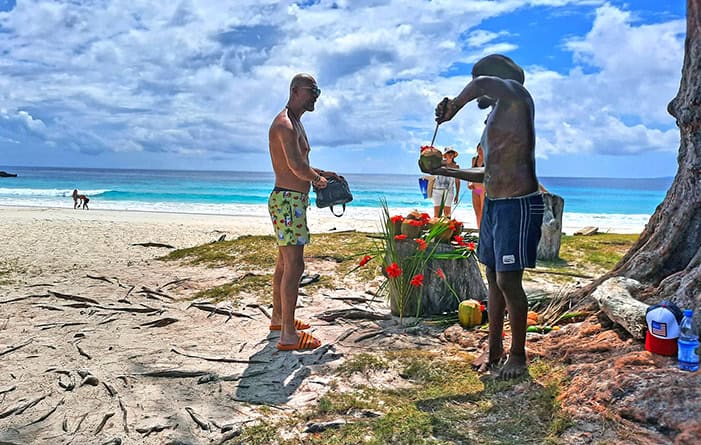
A vendor selling freshly picked coconuts
photography by: Omri Westmark
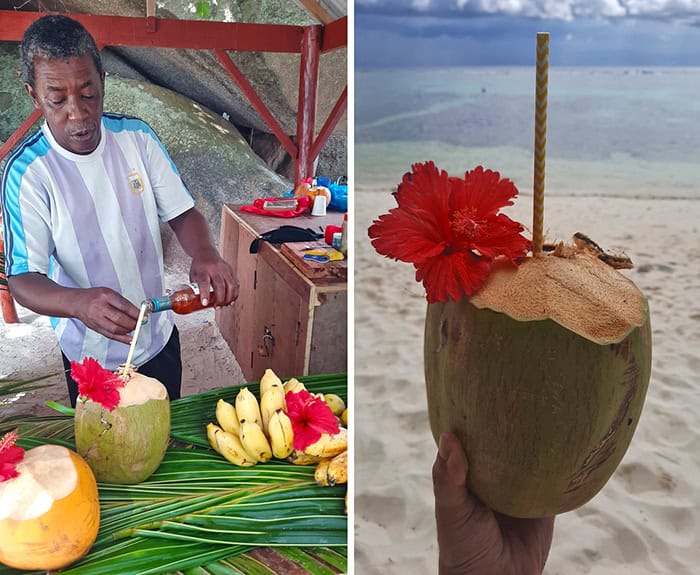
Coconuts garnished with local rum
photography by: Omri Westmark
The island is home to a predominantly Roman Catholic community whose roots trace back to the French colonial era.
Built in 1854 by Father Théophile Pollar, Notre Dame de L’Assomption Church remains the focal point of community life. Its ornate peach-hued façade stands in quiet contrast to the minimalist interior, where visitors might hear the distinct harmonies of a Seychellois choir during Mass.
Each year, on August 15th, the Feast of the Assumption transforms the church into the heart of an island-wide celebration, drawing worshippers and onlookers alike.
Beyond the church, a lesser-known Catholic shrine lies nestled among a cluster of granite rocks south of the Veuve Nature Reserve. This small chapel, dedicated to the Virgin Mary, blends almost seamlessly with the surrounding landscape, a testament to the island’s deep connection between faith and nature.
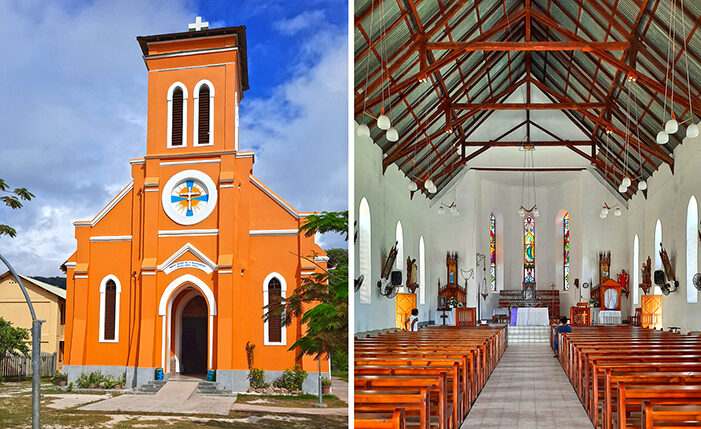
Notre Dame de L'Assomption Church
photography by: Omri Westmark
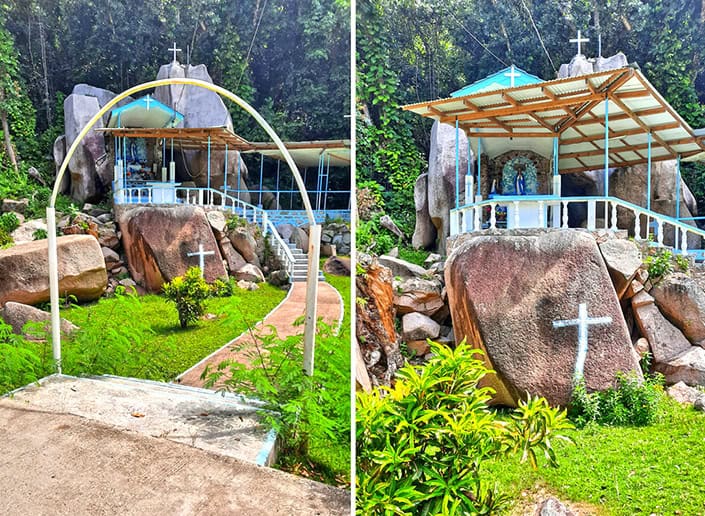
A small Catholic shrine
photography by: Omri Westmark